
I didn’t do it. I chose not to scroll my Facebook feed. I kept away from politics, healthcare, world news on terrorism, the gender identity crisis, people who are missing, out of work, molested, sick and dying, the Pope, and pretty much anyone who had a negative opinion about anything.
I didn’t glance at my checkbook or pay attention to the outstanding bills. I didn’t look at the calendar to see how many more days I had left before my kids went off to college, nor did I put one minute of thought into what needed to be purchased before they left (or how we were going to afford it.)
The unfinished projects around the house, the fact that we need the carpets cleaned, rooms painted, and clutter gone through and thrown out were nowhere on my radar. Nope!
My father’s caregiver arrived early, which meant I didn’t have to worry about toileting, dressing, or feeding him breakfast; I was also spared any accidents needing to be cleaned up. In addition, the kids all slept in, making the ambiance around our home peaceful and quiet.
Taking advantage of this rarity, with pillows propped against the headboard of my bed, I settled in with a freshly brewed, piping hot cup of coffee and a meditation on Saint Anne. It’s her feast day, July 26th, which she shares with her husband, Joachim. They are the parents who raised and prepared their daughter, Mary, to hear and accept the invitation of the Angel Gabriel to become the mother of Jesus.
The meditation drew me in. I recollected some of the amazing blessings this patron bestowed upon me and my family through her powerful intercessory prayers, thus setting the tone for the day; a spirit of thanksgiving became my focus and a refusal to allow the attitude of the world to skew my mood, my resolve.
I bolted out of bed, threw on some shorts and a T-shirt, splashed cool water over my face, brushed my teeth, ran a comb through my hair, penciled in my eyebrows, lathered on the sunscreen, and yelled down the hall, “Come on! We’re going to the beach!” And so the day began.
Perfectly content basking in the sun, I observed my youngest daughter and her friend. They were laughing, jumping and diving into oncoming waves like to dolphins. “I love seeing my kids happy.” I thought. “But on top of that, I love seeing them filled with joy, and those two are beaming with it!”
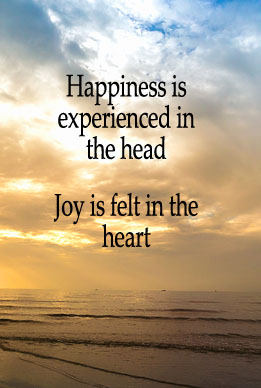 Joy – it’s beyond happiness. Happiness is what you feel when your team wins the Super Bowl, or you ace a test for which you’ve been studying, or you get chocolate cake for dessert. Joy is entirely different in that it wells from deep within and cannot be contained. Sometimes the feeling is so explosive it exits our eyes, runs down our cheeks, and produces this pressure in the chest as if your heart is going to burst wide open! It’s a complete abandonment in knowing you are right with God and the world around you.
The real difference between happiness and joy is that with joy the world could be crumbling down around you, yet there is still an intellectual certainty you are exactly where you should be in time and space; and on a higher plane, God is orchestrating whatever you’re going through to bring about something wonderful. Happiness is an emotion of the moment, void of any connection to God and the universe.
We returned home in enough time to grab a shower and head to 5:30 Mass. Mary asked if she could come, too. I was in a pleasant mood, happy that I could celebrate this feast day in church and offer it up as a “thank you” to God for all he’s given me. It didn’t hit until after receiving communion that my happiness turned into utter joy.
I walked back to the pew and began to thank God for my life (which was an answer to my parent’s prayer invoking the intercession of Saint Anne), my parents, my siblings, my friends, my husband, his job, our children, their friends, their schools, our home, our vehicles, our health, the food on our table, clothes on our backs, shoes on our feet, my father and the caregiver we have for him, our loving community, the holy priests we’ve been exposed to and the formation I have received, the trips and vacations we’ve taken and even the simple nights of sitting and watching a movie together as a family – the list kept going.
I started thinking of the people who were put on my path and how they helped guide me one way or another; some were a good influence and others not so good, but both kinds, I believe, were allowed on this journey to help me become who I am today. I thought of the jobs I had and the experiences I encountered; again, good and bad. I even thanked Him for those tragic and difficult times when I was led into darkness and thought there couldn’t possibly be any light at the end of my tunnel. I see now, many years later, every one of these instances happened for a specific reason – so that one day they’d lead me to my current place of peace and happiness.
Then I thought about all the times I blatantly spat in God’s face – the times I chose my will over his, having complete knowledge of what I was doing – and yet, his mercy was beyond my selfishness. Even though I acted in complete disobedience at times, after overcoming pride and coming to the point of repentance, he blessed me over and over again with a generosity far beyond that which I was deserving.
There is nothing more humbling than knowing full-well you have grievously hurt someone, either because of your stupidity, spite, or sheer selfishness – guilt gnawing at you, confirming just how unlovable you are – only to have the one whom you hurt see the agony of regret you carry in your heart, forgive you without question, wrap their arms around you, and tell you they love you. Not only do they extend undeserved kindness, they shower you with it!
The tears continued all the way home as I contemplated these things, my spirit soaring higher than a kite. I called a friend who knows me well – one who would not judge me as being a crazy woman – and I told him through the tears that there wasn’t a word to describe the joy I felt at that moment. My friend remembers when I only sought happiness, having no idea what real joy felt like. I could tell there was a lump in his throat and emotion in his heart as he shared in my euphoria. Yes, during that moment I was right with God, right with the world, and I knew this exact point in time had been orchestrated just so I could feel how much He loved me. This was the feeling my friend told me about years ago, but I was slow to grasp. This was what I always wanted, but was too scared to trust and receive.
Hanging up, I looked at Mary sitting next to me in the car. She heard the whole conversation and smiled. “It’s so cool you are this joyful mom.” She reached over and laid her hand on mine, which rested on the gearshift. Even that made a few more tears fall.
“No soul that seriously and constantly desires joy will ever miss it. Those who seek find. To those who knock it is opened.” ― C.S. Lewis
For the cynics out there, I acknowledge it’s most annoying to be around joyful people when you’re miserable. Trust me, I know what this feels like. You want to punch that stupid smile off their lips and hope they fall in a face plant on gravel… at least that’s how I used to feel. But deep inside every miserable person there is a silent envy because you wish you could feel joy, too, but are convinced you never will. The truth is, you can feel it if you want to.
Just like everyone else, I’m constantly hit with struggles: There never seems to be enough money, responsibilities are daunting, attitudes of others are not always forgiving, and life seems down-right unfair at times. But I have come to the realization that when I force myself to get out of the negativity of world and live in a state of thanksgiving for those things I do have – be them small and insignificant – I notice a significant change in my state of mind.
Too many people these days are angry or depressed. They’ve been inundated with a cloud of negativity, reminded of all they don’t have, made to fear the unknown, and are left feeling hopeless. It’s as if they’ve been infected with a debilitating flu which knocked them out, rendering them exhausted, and having no desire to get up, push back the curtains, and bask in the beauty of life. The only antidote to this kind of contagion is to replace those negative thoughts with positive ones.
I wonder how often these people sit and take an inventory of their lives beginning when they were young. Do they think about how often they’ve been shown mercy, or given blessings in both the good times and the not so good? Sometimes when we carry a heavy load, we tend to forget there were good people and good opportunities sprinkled in and among those tough times. It’s these we need to keep in our focus, remembering the many others who are much less fortunate.
Also, it’s become an epidemic for folks to blame their unfulfilled lives on being victims of the dysfunction of others. Is there anyone out there who hasn’t been victimized in some way by another’s dysfunction? Let’s face it, all of us are dysfunctional to some extent! We need to stop excusing away why we can’t be joyful. People or situations don’t take away our joy; it’s available to choose at all times. A big part to obtaining it is acknowledging that God really does have things under control and is constantly trying to reorient us onto a better path. Unfortunately, if we are so infected with negativity, there isn’t much room left to trust and hope in His plan for something great, which could waiting just around the corner.
We all need to curb our appetite for the junk. It’s been said over and over, “You are what you eat”. If you’re stuck eating a diet of negativity, try eliminating snacking throughout the day on depressing news and people’s impugning attitudes. Instead, seek out healthier choices to fill the void like immersing yourself in words, images, and music that encourage, lift the spirit, and provide hope. Most of all, don’t forget to count the blessings scattered throughout your day – they are the calories that fuel joy!
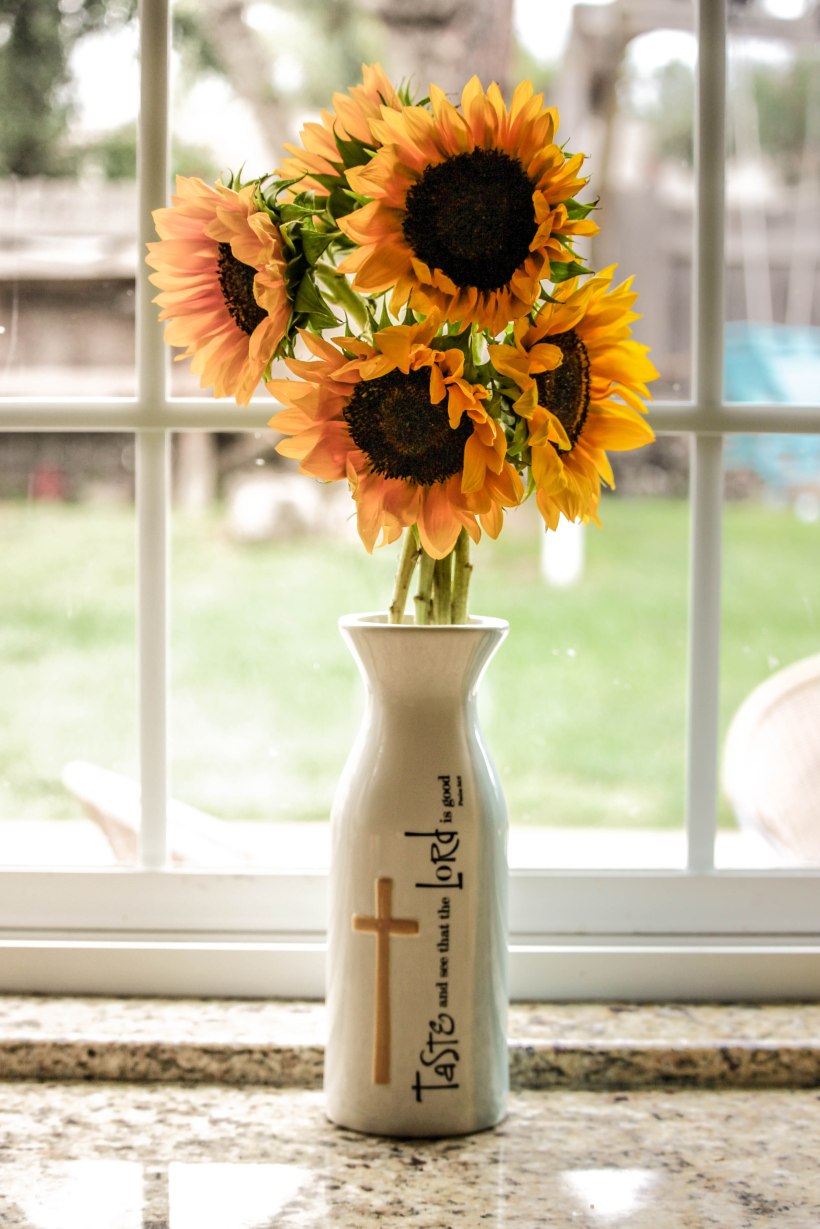
 Peace and quiet. That’s all I wanted but it’s not what I was getting. Agitated and ready to depart, I took one more look around then saw it. A simple vase was placed under a small statue in the niche to my left. In it was a handful of bright yellow sunflowers. I closed my eyes and a little smile came over on my lips as an association came to mind.
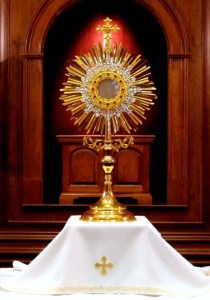 To those unfamiliar with the word, a monstrance reverently displays a consecrated Communion Host in a glass receptacle. It’s customarily surrounded by a starburst to replicate how Jesus, being the Light of the World, pours forth his light into our darkness. We use a monstrance in times of special prayer to honor and adore the true presence of Christ in the Eucharist. (For more on why we honor the Eucharist, see link below.)
 With Passion and Purpose